
CIOReview Europe Weekly Brief
Be first to read the latest tech news, Industry Leader's Insights, and CIO interviews of medium and large enterprises exclusively from CIOReview Europe
A featured contribution from Leadership Perspectives: a curated forum reserved for leaders nominated by our subscribers and vetted by the CIOReview Advisory Board.

Klöckner Pentaplast
Unlocking The Power Of Aws Microservices In Manufacturing
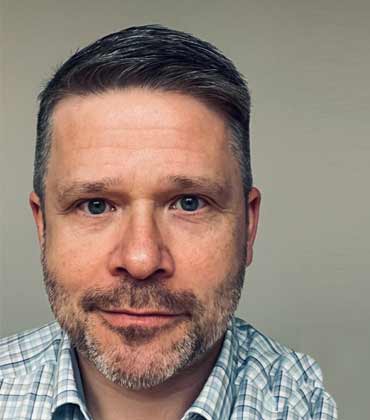
Maik is a passionate individual dedicated to developing innovative solutions to transform the technology landscape. With extensive experience in both industry and IT, as well as a profound understanding of IT systems, he is constantly seeking opportunities to utilize the most cuttingedge technologies to create efficient and scalable solutions. Throughout his career, Maik has demonstrated his capability to successfully oversee complex projects and devise innovative solutions that enhance IT efficiency and performance.
Can you please provide your approach to optimizing infrastructure in a dynamic environment and how you ensure scalability, security, and cost-effectiveness in your infrastructure solutions?
In the manufacturing industry, our greatest challenge is maintaining a high level of speed and scalability in response to the requests we receive from colleagues. To tackle this, we focus on simplifying our on-premise IT infrastructure, especially with over 30 production sites worldwide. Cloud technologies provide an opportunity to simplify and standardize our surroundings. We adopt a clear approach to using SaaS and cloud-only solutions and providers, allowing us to easily scale up and down capacity as required. However, this approach presents a challenge in fulfilling requests promptly. Fortunately, our environment enables us to quickly deliver additional compute power or storage whenever needed.
If your company can provide consent, can you share your experiences from successful projects or initiatives where you optimized AWS microservices in production environments, resulting in improved performance or cost savings?
“One of the important things that they must adopt is to think big, start small, and deliver fast. Once an environment is established where a small-scale project gains momentum and demonstrates its advantages, it is likely to stimulate further ideas from the team, contributing to the expansion of the cloud environment”
We had a project in September last year to develop a proof of concept. We primarily used on-premise infrastructure solutions for our software applications. Recently, we aimed to establish a direct connection between our PLCs and the cloud to measure thickness profiles on our production lines in a new manufacturing setup. With approximately 30,000 data points per reel, we sought to eliminate on-premise infrastructure entirely. Instead, we established a direct connection with the data from the PLCs, transferring it through a gateway into the AWS environment. Here, we leveraged features such as CloudFront, IoT Core, Aurora, Lambda, and Grafana to enable real-time calculations of the thickness profile of the films we produce. This transition not only resulted in cost savings but also focused on enhancing quality by providing operators with real-time data within seconds, minimizing internal rejections or credit notes.
What are some of the challenges in the reliability and recoverability of data in a microservices production environment that current services are unable to provide an optimal solution for?
Many manufacturing and industrial companies face challenges in maintaining a stable internet connection, especially in regions with inconsistent connectivity. While there's a desire to leverage cloud technologies and microservices, the risk for organizations, particularly in manufacturing, is significant. Ensuring seamless production during internet downtime becomes crucial. Although seeking live data and streamlining IT through cloud data services is appealing, inherent limitations and challenges must be carefully considered in the manufacturing industry.
What are the primary "do's" and don'ts that you would recommend to professionals with similar responsibilities in the tech sector to enhance their effectiveness and success?
Many companies want to start their cloud journey but often struggle in determining the right approach. It's important to think big, start small, and deliver fast. Select a topic that addresses a significant pain point within the organization, often combined with a financial aspect. Addressing issues with a direct financial impact and implementing swift solutions through cloud services helps the entire organization understand the substantial benefits and opportunities offered by the cloud. Establishing a smallscale project that demonstrates advantages stimulates further ideas, contributing to the expansion of the cloud environment.
What is your vision for the future of AWS microservices in production environments?
The challenge for organizations lies in the seemingly endless opportunities presented by cloud initiatives. As more organizations engage with these projects and witness the benefits, a multitude of requests and ideas emerge. Filtering and prioritizing these ideas become significant hurdles. However, with a robust hyperscaler like AWS offering many possibilities, there's immense potential to turn these ideas into reality. In the future, I envision leveraging AWS as a hub to connect all existing on-premise systems, gathering data across various sites and systems. This data will allow us to make predictions, calculations, and facilitate quicker decision-making to simplify processes and enhance the organizational environment.
We would appreciate it if you could provide us with your biography
I spent 12 years in the Navy with a strong focus on information technology. Following that, I worked for another manufacturing company for an additional 12 years, mostly in the merger and acquisition area where I was tasked with the IT integration of site services and applications worldwide. I spent a significant amount of time in Asia, South Africa, Russia, Ukraine, and Europe, ensuring the smooth integration of these companies and their activities into our IT environment. The last six years I have spent with Klöckner Pentaplast mainly focusing on three topics, including managing both on-premise and cloud-based infrastructure, emphasizing digitalization with a particular focus on industry 4.0, and ensuring that the current IT architecture is well-prepared for future success
